

The issue is not merely “they do not read Moses.”
It is that without Torah, they often read the apostles without the vocabulary, categories, symbols, institutions, feasts, covenant structure, purity laws, sacrificial background, land promises, priesthood, blessings/curses, and legal logic that the apostles themselves assumed.
Consider Peter’s warning: (2 Peter 3:15-16)
Bear in mind that our Lord’s patience means salvation, just as our dear brother Paul also wrote you with the wisdom that God gave him.
He writes the same way in all his letters, speaking in them of these matters. His letters contain some things that are hard to understand, which ignorant and unstable people distort, as they do the other Scriptures, to their own destruction.
Core thesis: Do You Know the Biblical Definitions of these?
If you do not know the Torah, you will often misread:
-
sin
-
holiness
-
covenant
-
love
-
grace
-
faith
-
righteousness
-
justice
-
uncleanness
-
sacrifice
-
priesthood
-
temple
-
Sabbath
-
feasts
-
circumcision
-
food laws
-
idolatry
-
adultery
-
repentance
-
blessing and curse
-
what it means to “know God”
-
what it means to “walk with God”
Below is a broad list of the main places this happens.
1. They redefine sin without Torah
What is often missed:
The Bible defines sin in relation to God’s law.
Torah background:
Sin is not a vague bad feeling. It is transgression against God’s commands.
Key effect:
If Torah is sidelined, sin becomes subjective, church-tradition-based, or merely “being unkind.”
Examples often misread:
-
“Sin” becomes detached from commandment violation.
-
“Lawlessness” gets softened into generic wickedness.
Why Torah matters:
Without Torah, people talk about sin while ignoring the very standard that identifies it.
2. They misunderstand grace as the opposite of law
Common mistake:
Grace and law are treated as enemies.
Torah reality:
The giving of Torah itself was grace. God redeemed Israel first, then instructed them how to live.
Exegetical issue:
Grace is not God lowering His standards; grace is God rescuing and teaching a people how to walk with Him.
What gets missed:
-
grace does not mean moral autonomy
-
grace does not mean commands are irrelevant
-
grace does not mean obedience is legalism
3. They confuse salvation and sanctification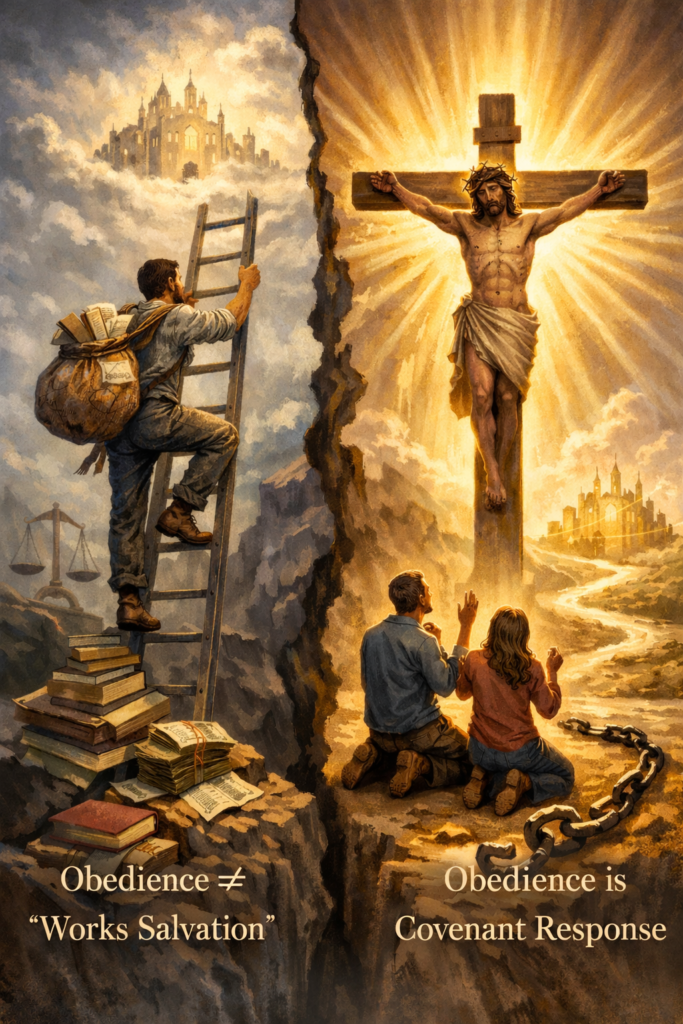
This is one of the biggest errors.
Common mistake:
If obedience is discussed, many immediately hear “works salvation.”
Torah-informed correction:
The Bible often distinguishes:
-
how one is redeemed
-
how the redeemed are to walk
Israel was delivered from Egypt before Sinai.
Redemption came first. Instruction followed.
Missed point:
Torah helps show that obedience is covenant response, not self-earned redemption.
4. They redefine love for God as emotion instead of obedience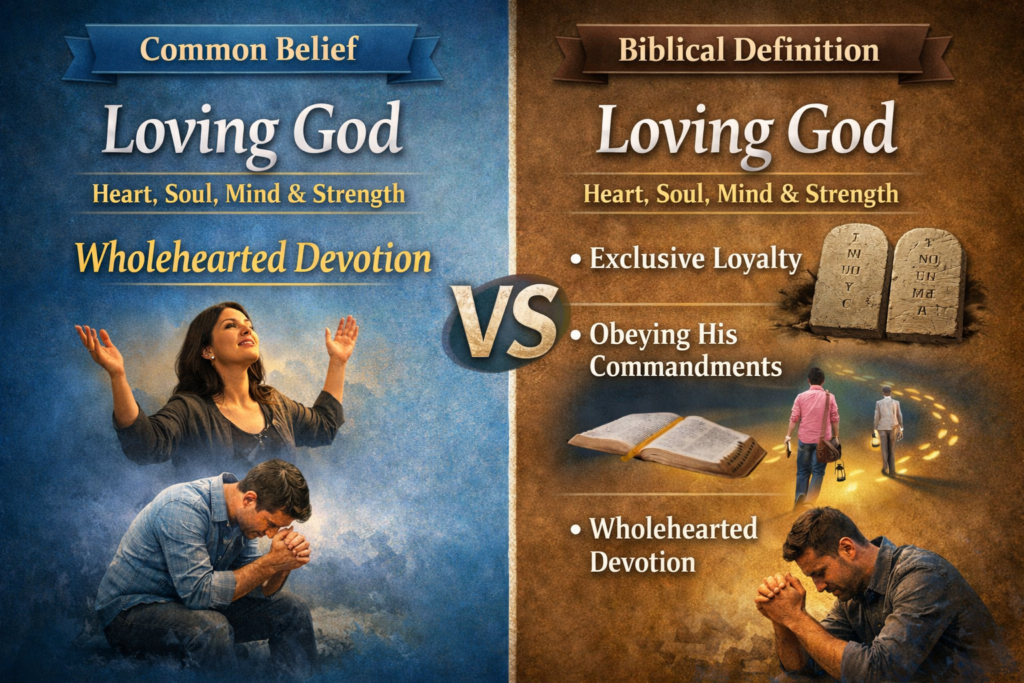
You have explored this before, and it is a major one.
Evangelical error:
“Love God” is often reduced to affection, worship music, or private devotion.
Torah definition:
To love God is tied to:
-
keeping His commandments
-
fearing Him
-
walking in His ways
-
cleaving to Him
-
covenant loyalty
Without Torah:
Love becomes sentimental instead of covenantal.
5. They miss that faith in Scripture includes fidelity and obedience
Common mistake:
Faith is treated as mere mental agreement.
Torah background:
Biblical faith is trust expressed in action. Abraham trusted, therefore he obeyed.
What gets distorted:
People think obedience somehow negates faith, when in Scripture obedient response is often the proof of faith.
6. They misunderstand righteousness
Common evangelical reduction:
Righteousness is only an imputed status.
Torah framework:
Righteousness also has behavioral content: justice, honesty, covenant faithfulness, right judgments, right weights, mercy, fidelity.
What gets lost:
The Bible’s moral texture of righteousness.
7. They flatten holiness into “be nice”
Torah teaches:
Holiness is separation unto God according to His standards.
Without Torah:
Holiness becomes vague spirituality, modest church culture, or inner sincerity only.
What gets lost:
The concrete form of holiness in everyday life.
8. They do not understand the biblical meaning of unclean vs sinful
This is crucial.
Common confusion:
Unclean = immoral.
Torah distinction:
Something can be ritually unclean without being morally sinful.
Why this matters:
Without Torah, people badly misread:
-
purity laws
-
leprosy accounts
-
menstruation laws
-
corpse contamination
-
temple approach
-
clean/unclean animals
This also distorts how they read Jesus touching the unclean.
9. They misunderstand Jesus healing the unclean
Common reading:
Jesus ignored purity law.
Torah-informed reading:
Jesus is not violating holiness. He is overcoming impurity by divine power.
Missed point:
His actions show authority and cleansing, not contempt for Torah.
10. They misread “fulfill” as “end” in Matthew 5
This is one of the most frequent mistakes.
Common claim:
Jesus fulfilled the law, therefore it is gone.
Torah-aware problem:
That reading often ignores the surrounding context where Jesus denies abolishing the Law and Prophets.
What Torah literacy prevents:
It stops people from assuming “fulfill” means “cancel.”
11. They misunderstand Paul because they do not know the law he is discussing
This is enormous.
Common error:
Every time Paul says “law,” readers assume he means the same thing in the same way.
But Torah background shows distinctions such as:
-
Torah as divine instruction
-
works of law / boundary markers
-
penalty of law
-
legal condemnation
-
misuse of law
-
man-made boasting around law identity
Without Torah:
Paul gets turned into a preacher against Moses, rather than a Jewish apostle arguing against misuse, boasting, hypocrisy, and reliance on flesh.
12. They misread “under the law”
Common assumption:
“Under the law” = trying to obey God’s commandments at all.
Torah-informed caution:
Often the phrase is about condemnation, jurisdiction of penalty, or a certain covenantal/legal standing—not simply “obeying God.”
What gets missed:
Paul can criticize being “under the law” while also affirming the law as holy, just, and good.
13. They misread Romans 3:31
Many quote Paul on faith and stop early.
Missed point:
Paul explicitly denies that faith nullifies the law.
Why Torah matters:
Without Torah, people read Paul selectively and miss that faith establishes rather than destroys the divine standard.
14. They misunderstand lawlessness
Common reduction:
Lawlessness just means bad behavior in general.
Torah background:
Lawlessness assumes there is an actual divine law being violated.
This affects texts like:
-
warnings about false believers
-
end-times deception
-
“depart from me” passages
Without Torah, “lawlessness” loses its teeth.
15. They misunderstand what Jesus meant by “least” and “great” in the kingdom
If Torah is treated as obsolete, this saying becomes hard to explain.
Torah-informed reading:
Jesus speaks as though commandments still matter enough to teach or relax.
Missed point:
The kingdom discourse does not sound like Torah has become irrelevant.
16. They often miss the covenant structure behind blessing and curse
Torah pattern:
Obedience brings blessing; rebellion brings curse, exile, judgment.
Without Torah:
Prophets and apostles get read in isolation.
Result:
People miss why judgment language is so severe and covenantal.
17. They do not understand idolatry in its Torah depth
Common modern reduction:
Idolatry = loving money too much.
Torah depth:
Idolatry includes:
-
false worship
-
rival mediators
-
forbidden images
-
pagan rituals
-
syncretism
-
mixing holy and profane
Without Torah, the Bible’s warnings about idolatry are often psychologized.
18. They misunderstand adultery in both literal and covenantal senses
Torah background:
Adultery is not just sexual betrayal. It also becomes the prophetic pattern for covenant unfaithfulness to God.
Without Torah:
The prophets’ marriage imagery loses force.
19. They do not grasp the seriousness of blood
Torah teaches:
Blood is sacred, tied to life, atonement, and prohibition.
Without Torah:
Statements about the blood of the covenant or the blood of Messiah become sentimentalized instead of covenantal and sacrificial.
20. They misunderstand sacrifice
Common mistake:
Sacrifices are viewed as primitive rituals that Jesus simply replaced.
Torah-informed correction:
Sacrifices teach:
-
substitution
-
atonement
-
approach to holiness
-
priestly mediation
-
cleansing categories
-
seriousness of sin
Without Torah, the meaning of Messiah’s death becomes thinner.
21. They misunderstand atonement
Without Torah:
Atonement is often reduced to “Jesus paid my debt” with little texture.
Torah provides the actual categories:
-
covering
-
cleansing
-
ransom
-
substitution
-
priestly mediation
-
sanctuary purification
-
covenant restoration
22. They misread the Lamb of God
Without Torah and feast background:
The title sounds poetic only.
But Torah fills it with meaning through:
-
Passover
-
sacrificial system
-
covenant deliverance
-
blood protection
-
redemption themes
23. They misunderstand the priesthood
Common issue:
Priesthood language is treated metaphorically only.
Torah-informed reading:
Priesthood is a precise institution with rules, garments, access restrictions, mediation roles, and holiness levels.
Without Torah, Hebrews is almost impossible to fully grasp.
24. They misunderstand Hebrews
This is one of the biggest categories.
Common evangelical reading:
Hebrews proves the law is obsolete in every sense.
Torah-informed caution:
Hebrews is deeply dependent on Torah categories:
-
priesthood
-
tabernacle
-
sacrifices
-
covenant
-
access
-
blood
-
holy places
Missed point:
Hebrews does not erase Torah knowledge; it requires it.
25. They misread Hebrews 8:13
You have discussed this recently.
Common claim:
“Obsolete” means all Torah instruction is gone.
Torah-aware caution:
The context is covenantal and priestly. Many readers jump too quickly from covenant-language to abolition of every instruction of God.
What is missed:
You must distinguish:
-
covenant administration
-
priesthood changes
-
sacrificial access
from -
the moral and covenantal instruction of God
26. They miss the meaning of new covenant
Common mistake:
New covenant = brand new religion with no continuity.
Torah-informed reading:
The new covenant promise explicitly involves God’s law being written on the heart.
Missed irony:
The very passage often used against Torah says Torah is internalized.
27. They misunderstand circumcision
Common error:
The NT rejects circumcision because Torah is bad.
Torah-aware correction:
The real issues are often:
-
whether circumcision is required for initial covenant entry by Gentiles
-
whether it is used for justification
-
whether ethnic markers become grounds for boasting
Without Torah literacy, the debate gets oversimplified.
28. They misunderstand Acts 15
Huge example.
Common reading:
Acts 15 proves Gentiles do not need Torah.
Torah-informed caution:
The chapter is addressing a specific issue: whether Gentiles must be circumcised to be saved.
What gets missed:
The council does not read like “Moses is irrelevant now.”
It reads like a ruling about entry, fellowship, idolatry separation, and a starting point for Gentiles among synagogue environments.
29. They misunderstand food laws
Common evangelical assumption:
Jesus and Peter abolished them, case closed.
Torah-aware caution:
Many arguments here ignore:
-
symbolic distinction language
-
purity categories
-
context of visions
-
issues of Gentile association
-
what specific texts actually say and do not say
Without Torah, readers often assume the conclusion before reading the details.
30. They misread Peter’s vision in Acts 10
Common claim:
The sheet vision is mainly about food.
Textual problem:
The chapter itself explains the vision’s application to people.
Torah-informed point:
Without attention to purity and separation themes, the meaning gets flattened into diet abolition.
31. They misunderstand Colossians 2:16–17
You have worked with this repeatedly.
Common claim:
Paul says not to keep Sabbath or feasts.
Torah-aware reading:
The text can be read as warning believers not to let outsiders judge them regarding their observance, in a context involving asceticism and human regulations.
What gets missed:
People often read the verse as anti-obedience when it may be defending believers in relation to covenant practices.
32. They misunderstand Sabbath
This is one of the clearest examples.
Common evangelical assumptions:
-
Sabbath was only for Jews
-
Jesus abolished it
-
Sunday replaced it automatically
-
“Jesus is my Sabbath” ends the matter
Torah-informed response:
Sabbath is rooted in:
-
creation
-
covenant sign
-
holiness
-
rest
-
liberation
-
imitation of God
Without Torah, people reduce Sabbath to:
-
legalism
-
a church day
-
or a vague rest-in-Christ metaphor
33. They misunderstand “Lord of the Sabbath”
Common mistake:
Lord of the Sabbath = therefore the Sabbath no longer matters.
Torah-aware reply:
Authority over a thing does not equal abolition of that thing.
Missed point:
The phrase makes most sense if Sabbath remains meaningful.
34. They misunderstand Jesus’ Sabbath disputes
Common church assumption:
Jesus broke the Sabbath to show it ended.
Torah-informed correction:
Often the disputes are with Pharisaic interpretations, burdens, and applications—not with God’s Sabbath itself.
Without Torah, readers think Jesus was anti-Sabbath when He was often defending the proper meaning of Sabbath.
35. They do not understand the appointed times / feasts
Common evangelical habit:
Feasts are dismissed as Jewish holidays with no ongoing relevance.
Torah framework:
The feasts are God’s appointed times, full of redemptive meaning, pattern, prophecy, memory, and identity.
What gets lost:
Huge portions of biblical time theology.
36. They miss how the Gospel narratives are shaped by feast context
Without Torah, they miss why timing matters around:
-
Passover
-
Unleavened Bread
-
Firstfruits
-
Pentecost
-
other appointed times
This weakens the prophetic precision of Messiah’s work.
37. They misunderstand firstfruits
Without Torah:
It becomes a vague metaphor for “something first.”
With Torah:
It becomes a precise covenantal and harvest category with resurrection implications.
38. They misunderstand Pentecost / Shavuot
Without Torah:
Acts 2 becomes just “the birthday of the church.”
With Torah background:
It carries rich connections to:
-
harvest
-
assembly
-
divine revelation
-
covenantal giving
39. They miss the meaning of Passover
Without Torah:
It becomes just a backdrop for the crucifixion.
With Torah:
It becomes essential for understanding deliverance, blood, household identity, memorial, substitution, and redemption.
40. They misunderstand the temple
Common reduction:
Temple language becomes purely symbolic.
Torah background:
Temple is structured holiness:
-
degrees of access
-
priestly mediation
-
sacrifice
-
divine presence
-
purity requirements
Without Torah, the temple language in the Gospels, Paul, and Revelation is flattened.
41. They misunderstand defilement
Without Torah:
Defilement is treated only as inner attitude.
Torah teaches:
There are categories of moral defilement and ritual defilement, and Scripture can use both.
This keeps readers from oversimplifying Jesus’ teachings.
42. They misunderstand justice
Torah gives concrete justice categories:
-
honest weights
-
care for the poor
-
gleaning
-
impartial courts
-
protection of the vulnerable
-
anti-bribery
-
debt ethics
-
restitution
Without Torah, justice language becomes political slogan language instead of biblical legal substance.
43. They miss the biblical logic of restitution
Common church focus:
Forgiveness only.
Torah adds:
Where possible, wrongs also require restoration and restitution.
Without Torah, repentance becomes verbal rather than reparative.
44. They misunderstand repentance
Common reduction:
Repentance = feeling sorry or praying a prayer.
Torah-informed reality:
Repentance includes turning back to God’s ways.
Without Torah, people repent “to God” while never asking, “to what standard am I returning?”
45. They misunderstand the fear of the Lord
Without Torah:
Fear becomes either denied or softened into “respect.”
Torah context:
Fear of God is tied to obedience, awe, covenant seriousness, and hatred of evil.
46. They miss the meaning of wisdom
Torah worldview:
Wisdom is not raw intelligence; it is skill in walking according to God’s instruction.
Without Torah, Proverbs and wisdom language can become generic life coaching.
47. They misunderstand what it means to “know God”
You have touched this theme before.
Common modern reading:
Know God = have spiritual awareness or relationship language only.
Hebrew/Torah framework:
To know God carries covenantal weight:
-
relational fidelity
-
obedience
-
loyalty
-
belonging
Without Torah, “I never knew you” is often read too shallowly.
48. They misunderstand walking with God
Torah meaning:
Walk is covenant conduct.
Common reduction:
It becomes private spirituality or emotional closeness.
49. They do not understand the prophets because they do not know Moses
This is massive.
Why it matters:
The prophets constantly prosecute Israel based on Torah violations.
If you do not know the covenant terms in Moses, the prophets sound random, harsh, or merely inspirational.
50. They misunderstand prophetic accusations of harlotry, uncleanness, oppression, and covenant breach
Because they do not know the legal/covenantal background in Torah.
51. They miss that the apostles assume a Jewish scriptural world
Common error:
People read the NT as if it dropped from heaven into a lawless vacuum.
Reality:
The apostles constantly reason from:
-
Moses
-
the prophets
-
temple categories
-
purity categories
-
covenant categories
-
feast timing
-
creation patterns
52. They misunderstand Jew and Gentile inclusion
Common assumption:
Gentile inclusion means Torah no longer matters.
Torah-aware question:
Or does it mean the nations are being brought into the God of Israel and must now learn how to walk among His holy people?
Without Torah, inclusion becomes assimilation into a new religion rather than incorporation into Israel’s covenantal story through Messiah.
53. They misunderstand the olive tree / commonwealth / covenant participation themes
Because they do not know the prior covenantal story the Gentiles are being brought into.
54. They miss that God’s character and His instruction are not opposed
Common evangelical instinct:
Commands are a burden; grace is God relaxing.
Torah-informed correction:
God’s law reflects His holiness, wisdom, justice, and love.
If you detach God’s commands from God’s character, obedience starts looking optional.
55. They misunderstand legalism
This is very important.
Common misuse:
Any call to obey Scripture gets labeled legalism.
Actual distinction:
Legalism is not the same as obedience.
Legalism is using law wrongly:
-
for self-justification
-
for boasting
-
without mercy
-
without faith
-
without heart transformation
Torah literacy helps distinguish faithful obedience from legalistic abuse.
56. They misunderstand tradition vs commandment
A major Gospel issue.
Without Torah:
People often cannot see when Jesus is confronting human tradition rather than God’s law itself.
57. They misunderstand clean and unclean animals as arbitrary
Torah context:
The distinctions are part of a larger holiness pattern of separation and order.
Without Torah, readers dismiss them without wrestling with why God gave them.
58. They misunderstand creation theology
Sabbath, male/female order, work/rest, food, holiness, fruitfulness, dominion—many themes begin in Torah.
Without Torah, later references lose their foundation.
59. They miss the continuity between Genesis and Revelation
Without Torah, Revelation becomes strange imagery disconnected from the earlier scriptural world.
But much of Revelation is built on:
-
temple imagery
-
plagues
-
covenant curses
-
priestly imagery
-
feast/world-order symbolism
60. They misunderstand the kingdom ethic because they sever it from Torah
Jesus’ kingdom teaching is often presented as replacing Torah rather than bringing it to its intended fullness and heart-depth.
Without Torah, the Sermon on the Mount is misread as brand-new ethics rather than authoritative exposition.
61. They misunderstand the phrase “weightier matters”
If Jesus says some matters are weightier, that implies continuity of commandment categories, not disappearance of all commandments.
62. They misunderstand mercy and sacrifice
Common mistake:
Mercy replaces obedience.
Torah-aware reading:
Mercy and sacrifice are not enemies; hypocritical ritual without covenant faithfulness is the problem.
63. They miss that the Bible’s moral world is corporate, not merely individual
Torah shapes:
-
family
-
tribe
-
nation
-
land
-
judges
-
priests
-
public holiness
Without Torah, faith becomes radically individualized.
64. They misunderstand covenant signs
Such as Sabbath and circumcision, because they have no covenant-sign framework.
65. They misunderstand why Jesus’ audience reacted so strongly
Many disputes only make sense if Torah categories were central and living issues.
Without Torah, Gospel conflicts seem overblown.
66. They often fail to distinguish God’s law from rabbinic fence laws or human additions
This causes confusion in the Gospels and in modern debates.
67. They miss the force of Deuteronomy behind Jesus’ temptations and teachings
Jesus repeatedly answers with Torah.
If Torah were irrelevant, that pattern would be strange.
68. They misunderstand covenant memory
Feasts, tassels, memorial acts, recitations, signs, mezuzah-type themes—Torah teaches that remembrance is embodied.
Without Torah, Christianity becomes abstract rather than practiced.
69. They misread blessed as emotional positivity
Torah and covenant theology show that blessedness is tied to walking in God’s ways, not merely feeling favored.
70. They misunderstand inheritance
Land, seed, nation, covenant promise, firstborn themes all begin in Torah.
Without that, inheritance language in later Scripture loses substance.
71. They miss the role of witnesses, testimony, and legal procedure
Torah supplies the courtroom logic behind many biblical scenes:
-
two or three witnesses
-
testimony standards
-
false witness
-
covenant lawsuit
Without Torah, many passages lose legal sharpness.
72. They misunderstand the biblical meaning of “commandments”
Often people say “Jesus only gave one command: love.”
But Torah defines what love looks like.
Without Torah, “love” becomes self-defined.
73. They misunderstand why John ties love to commandments
This makes perfect sense in a Torah-shaped world and less sense in a lawless sentimental framework.
74. They misunderstand what the apostles mean by obedience
Because they read obedience as optional fruit rather than covenant necessity.
75. They often replace biblical categories with systematic theology slogans
Examples:
-
“not under law”
-
“Jesus fulfilled it”
-
“that was for Israel”
-
“we are in grace”
-
“my Sabbath is Christ”
Those phrases often function as shortcuts that bypass actual exegesis.
Summary:
If a person does not know Torah, they will often misread the rest of Scripture because Torah provides the Bible’s first definitions of sin, holiness, love, justice, righteousness, covenant, sacrifice, priesthood, Sabbath, feasts, clean and unclean, blessing and curse, repentance, and what it means to walk with God. As a result, many evangelicals unintentionally import vague modern meanings into these words, and then misinterpret Jesus, Paul, Hebrews, Acts 15, Colossians 2, the Sabbath, the feasts, and the whole covenant story. The issue is not merely missing information; it is missing the original exegetical framework.
A sharper list of the biggest examples
If you want the strongest “headline” examples, use these first:
-
Sin
-
Love of God
-
Faith and obedience
-
Grace vs law
-
Salvation vs sanctification
-
Matthew 5:17
-
Romans 3:31
-
Lawlessness
-
Sabbath
-
Lord of the Sabbath
-
Acts 15
-
Colossians 2:16–17
-
Hebrews 8
-
Food laws / Acts 10
-
Feasts / appointed times
-
Sacrifice and atonement
-
Priesthood and Hebrews
-
New covenant law written on the heart
-
Knowing God
-
Prophets as covenant prosecutors